When was the last time you thought about the ground beneath your feet?
Probably not often.
We walk on it, build on it, farm on it — yet soil is one of the most overlooked forces holding our world together.
Beneath every bustling city, every towering tree, and every stretch of farmland, soil is quietly working miracles. It stores water, grows food, nurtures forests, filters pollutants, and even cleans the air we breathe.
But perhaps most remarkably, healthy soil plays a massive role in one of the biggest challenges of our time: climate change.
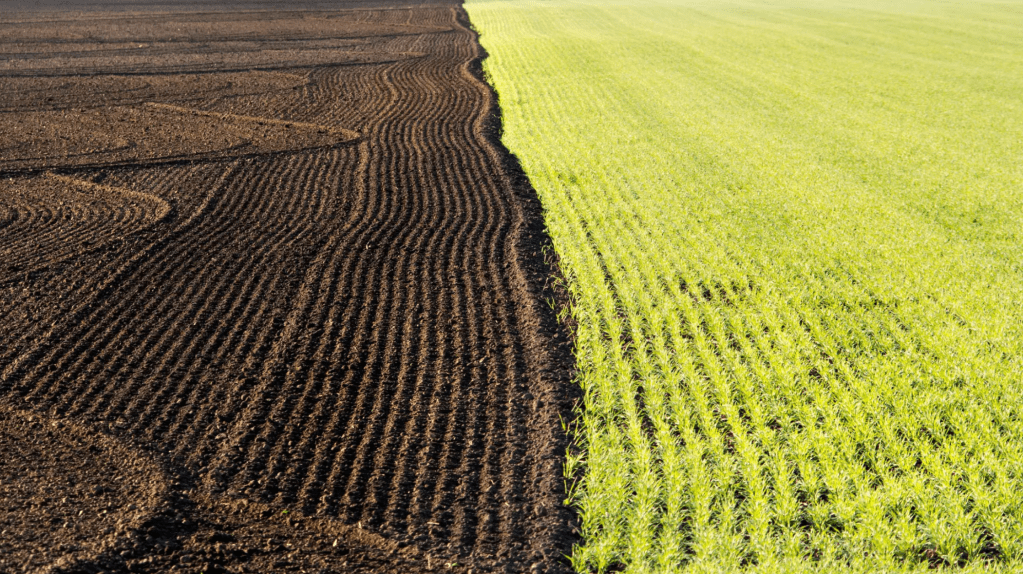
Soil: Nature’s Hidden Superpower
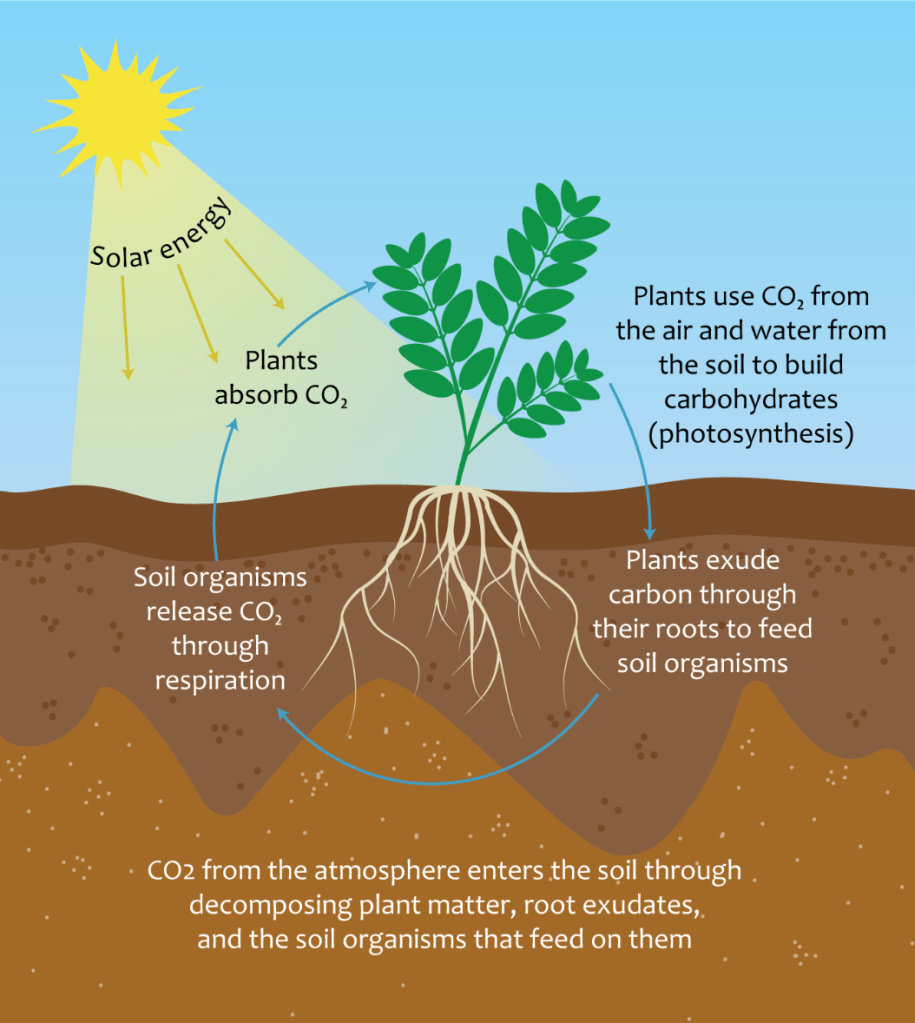
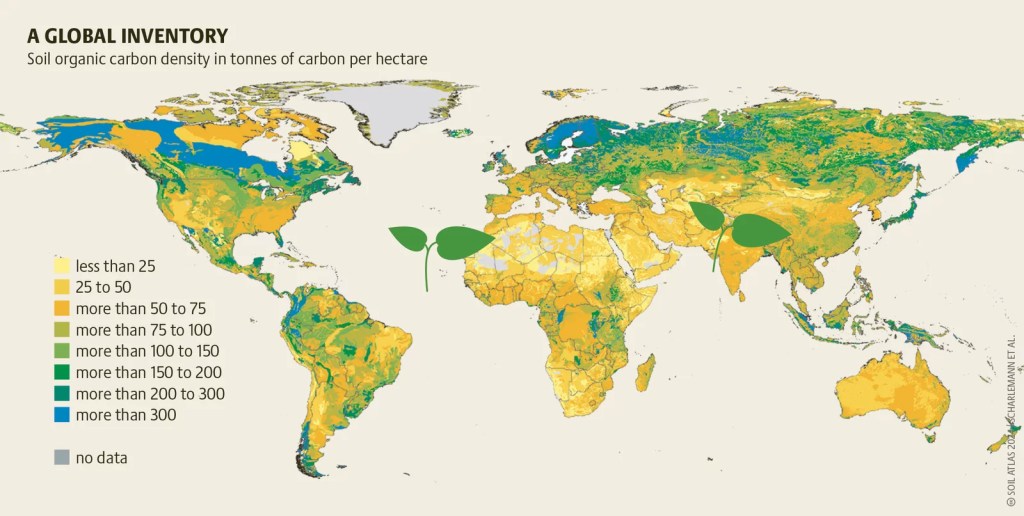
You might have heard about forests and oceans acting as carbon sinks, absorbing CO₂ from the atmosphere. But here’s a less-known fact: Soil stores more carbon than the atmosphere and all plant life combined.
“Carbon cycling: There is more carbon stored in soil than in the atmosphere (760 billion tonnes) and in vegetation (560 billion tonnes) combined.”
— European Commission (European Commission, 2016)
When soil is healthy — rich in organic matter, alive with roots and microbes — it locks away vast amounts of carbon underground.
When soil is degraded — by deforestation, poor farming practices, or urban expansion — it releases that carbon back into the atmosphere, accelerating global warming.
The difference between a vibrant patch of living earth and a dried, depleted one could mean millions of tons of CO₂ either trapped safely underground or contributing to climate chaos.
Moreover, soil doesn’t just store carbon passively. Living organisms like mycorrhizal fungi create complex networks underground, actively transporting carbon and nutrients between plants and soil, enhancing long-term carbon sequestration.
What Makes Soil Healthy?
Healthy soil is like a bustling underground city.
It’s teeming with life: earthworms, insects, bacteria, fungi, and countless other microorganisms. This vibrant network:
- Breaks down organic material
- Enhances water retention and drought resilience
- Strengthens plants against diseases
- Sequesters atmospheric carbon efficiently
“A single teaspoon of soil contains more microorganisms than there are people on Earth.”
— Ecological Society of America (ESA, 2000)
Practices like regenerative agriculture, reforestation, agroforestry, and wetland conservation are all centered around one principle: restoring the natural life of soil.
By nurturing soil health, we don’t just improve crops — we stabilize entire ecosystems, preserve water resources, and safeguard biodiversity.
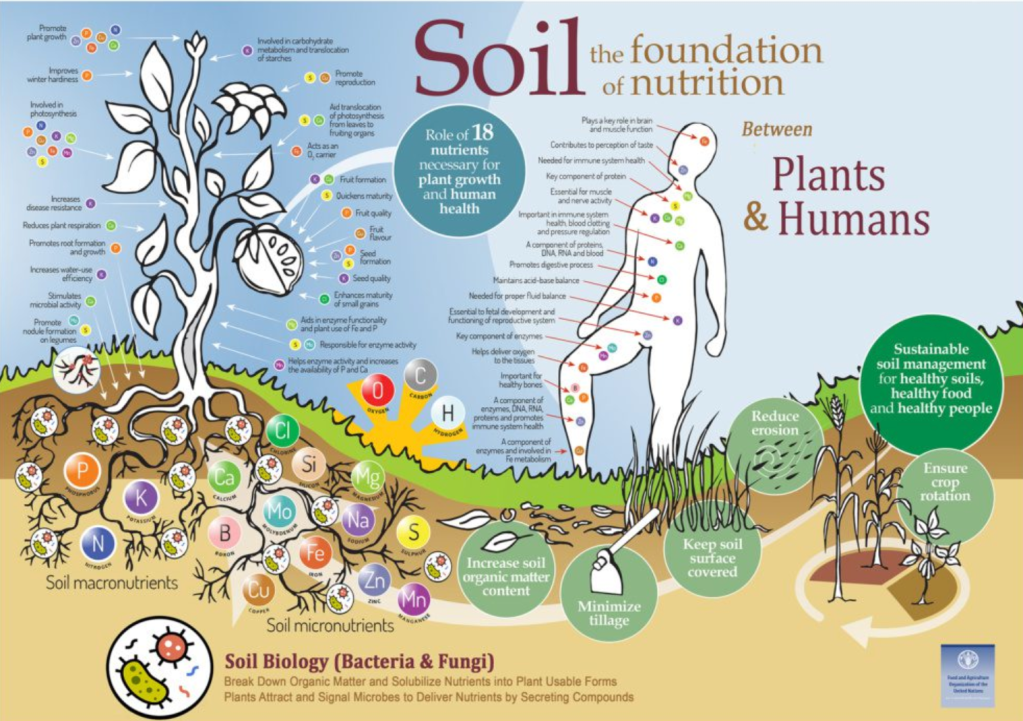
According to Suzanne Longacre, The soil is rich in organic matter, nutrients and biology, and its relationship to plants. Soil biology decomposes (eats) organic matter, then digests the nutrients and converts them into a form that plants can uptake to fortify their fruits and vegetables. Humans benefit greatly when they eat these vitamin, mineral and nutrient-rich fruits and vegetables.
A Global Crisis We Barely Talk About
Despite its importance, soil degradation is a growing global crisis.
According to the United Nations, about 33% of the world’s soils are moderately to highly degraded.— United Nations Office for Disaster Risk Reduction (UNDRR)
This degradation threatens food security, water availability, biodiversity, and carbon storage. Without intervention, the situation could lead to cascading impacts on global stability — from increased poverty to forced migration.
Moreover, soil erosion alone causes the loss of an estimated 24 billion tons of fertile soil annually, shrinking the world’s ability to grow food and fight climate change (FAO, 2015).
In short:
When soil dies, life struggles to survive.
Soil as a Climate Solution
Fortunately, the story doesn’t end in despair.
Soil has an incredible ability to regenerate if given the chance.
Restoring soil health could offset a significant portion of humanity’s annual carbon emissions. Estimates suggest that regenerative land practices could sequester up to 5 billion tonnes of CO₂ per year — a meaningful contribution to global climate goals.
“Improving soil organic carbon levels is a win-win strategy — it enhances resilience and mitigates climate change.”
— Food and Agriculture Organization (FAO) (FAO, 2017)
By protecting soils through conservation efforts, reforestation, and sustainable agriculture, we turn degraded landscapes into powerful carbon sinks — naturally reversing some of the damage we’ve inflicted on the planet.
Where Carbon Credits Come In
This is where carbon credits enter the picture.
When projects focus on restoring forests, regenerating agricultural lands, or protecting wetlands, they’re not just preserving beauty — they are actively rebuilding the Earth’s soil carbon bank.
Through rigorous scientific methodologies, these projects measure the amount of carbon sequestered and generate carbon credits — tradable certificates that represent real, verified climate benefits.
When businesses or individuals purchase these credits, they directly finance nature-based solutions — paying to keep carbon locked underground where it belongs.
“Carbon markets can provide critical funding for regenerative practices that restore soils and enhance long-term carbon storage.”
— MIT Climate Portal (MIT, 2021)
In short:
Healthy soils → More carbon storage → Validated climate action → A resilient future.
Carbon credits create a virtuous economic loop where healing nature becomes profitable — aligning environmental urgency with market forces.
The Future Grows from the Ground Up
Saving the planet isn’t just about reducing emissions — it’s about restoring the natural systems that kept our world stable for millennia.
And at the very heart of those systems lies soil: silent, unseen, and absolutely essential.
If we heal the soil, we heal the water.
If we heal the soil, we heal the climate.
If we heal the soil, we heal ourselves.
As we dream of greener cities, thriving forests, and healthier communities, let’s remember: it all starts underground.
Because when we nurture the soil, we nurture the very foundation of life.
Conclusion: A Future Rooted in Soil
In the grand story of climate solutions, soil often remains an unsung hero — hidden beneath our feet, quietly working miracles.
But the truth is simple and powerful:
If we want to secure a livable future, we must begin with the ground we walk on.
Healthy soil holds the power to nourish our food, purify our water, stabilize our climate, and restore our ecosystems.
It is not a resource to be taken for granted — it is a living foundation that demands care, respect, and urgent action.
Through regenerative practices, conservation efforts, and mechanisms like carbon credits, we have a chance to rebuild what has been lost — and in doing so, regenerate the planet itself.
The future will not be built only in skyscrapers or laboratories.
It will be grown — patiently, steadily, from the soil up.
At Offset Flow, we believe in nurturing this foundation.
Because when we invest in the earth, we invest in everything.
Are you interested ON HOW YOU CAN MAKE A DIFFERENCE? Contact us here: SOLUTIONS.
References
- European Commission. (2016). Soil and Climate. Link
- United Nations Office for Disaster Risk Reduction (UNDRR). Soil Erosion. Link
- Ecological Society of America (ESA). (2000). Carbon Sequestration in Soils. Link
- Food and Agriculture Organization (FAO). (2017). Soil Organic Carbon: The hidden potential. Link
- MIT Climate Portal. (2021). Soil-Based Carbon Sequestration. Link
Offset Flow
Carbon Credits & Net-Zero. TOGETHER.
Menú








 Offset Flow
Leave a comment