Carbon credits promise a simple solution: pay to fund projects that reduce or remove greenhouse gases, and the planet wins. But beneath the glossy marketing, the reality can be far murkier. From a major automaker’s reputation rescue mission to an oil giant’s offset juggernaut and a refrigerant loophole scandal, high-profile cases reveal how easy it is to game the system—and how vital it is to do offsets right. Here’s a deeper look at these controversies, the lessons they teach, and how you can ensure your carbon credits deliver genuine impact.

Volkswagen’s Redemption Playbook
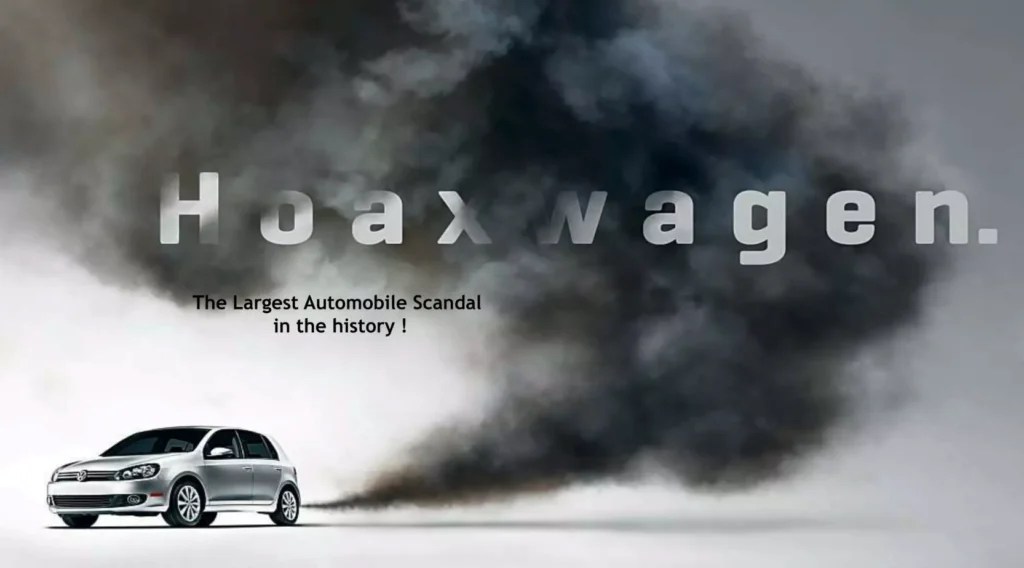
In 2015, Volkswagen’s “clean diesel” brand unraveled in spectacular fashion. The company admitted installing defeat-device software in millions of cars, secretly spewing nitrogen oxides at up to 40 times U.S. legal limits. Facing billions in fines and a massive hit to its credibility, Volkswagen needed a way to rebuild trust—and fast.
Rather than overhauling its fleet immediately, VW invested heavily in carbon-offset projects, announcing an ambitious pledge to become “carbon neutral” by funding reforestation and renewable-energy initiatives. Press releases featured lush forests and gleaming wind turbines, but on-the-ground reports painted a different picture. Auditors found that many so-called new forests were simply existing woodlands, meaning VW claimed credit for carbon already sequestered. In some reforestation schemes, sapling survival rates were so low that the actual climate benefit was negligible.
To make matters worse, the timing of these purchases looked suspicious. Offsets rolled in after the “dieselgate” scandal broke—hardly the hallmark of proactive sustainability. Critics and watchdog NGOs accused VW of trading genuine action for a superficial PR fix. While Volkswagen’s offset campaign was arguably better than doing nothing, it underscored a critical truth: offsets bought in haste—and without rigorous verification—can do more harm to credibility than good.
Shell’s Half-Billion-Dollar Bet
Fast-forward to 2021, when energy giant Shell unveiled a staggering US $300 million investment in “nature-based solutions” to help customers cut emissions. The announcement dazzled the business world: an oil major pledging tens of millions of carbon credits and promising 120 million tons of offsets by 2030.
Yet investigative journalists and environmental groups quickly flagged troubling details. Many of the forestry projects Shell backed were already in motion—meaning the trees would have been planted anyway. Claiming those reductions as “additional” inflated the real impact. In other cases, rural communities reported that farmers were asked to clear new land—only to replant it for future offset credits, shifting deforestation rather than preventing it.
These loopholes—known as baseline manipulation and leakage—allowed Shell to report vast emissions reductions on paper, while actual atmospheric CO₂ levels barely budged. The backlash was swift: prominent NGOs demanded a full audit of Shell’s offset portfolio, and Shell faced growing pressure to shift toward internal emissions cuts rather than relying on questionable carbon credits.
Shell’s experience highlights that scale alone isn’t proof of impact. A massive offset budget won’t save the planet if the underlying projects lack additionality, permanence, and social safeguards.
The HFC-23 Carbon-Credit Debacle
Perhaps the most notorious carbon-credit scandal involves HFC-23, a super-potent refrigerant with 12,000 times the warming potential of CO₂. Under the Kyoto Protocol’s Clean Development Mechanism (CDM), destroying just one ton of HFC-23 earned factories enormous offset payments—far more than the cost of production and destruction.
Unsurprisingly, some chemical plants in China and elsewhere turned this into a cash cow. They ramped up HFC-23 production solely to destroy it and claim credits. A landmark 2011 paper in Nature Climate Change estimated that up to 80 percent of HFC-23 credits resulted from these perverse incentives, delivering minimal net climate benefit.
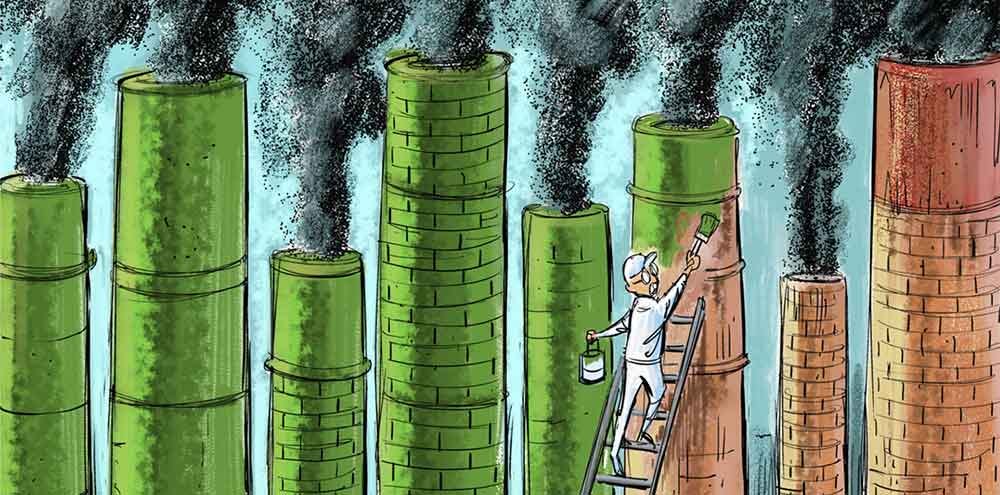
In response, CDM regulators slashed credit rates in 2013, but by then billions of dollars had flowed into schemes that profited from creating pollution to solve it. The HFC-23 fiasco stands as a stark warning: carbon-credit mechanisms with poorly aligned incentives can backfire spectacularly, rewarding polluters rather than reformers.
Lessons Learned
These three scandals share common threads:
- Offsets after the fact often amount to little more than corporate damage control. Genuine sustainability requires proactive emission reductions, not just book-entry offsets.
- Baseline manipulation—claiming credit for actions that would have occurred anyway—undermines the integrity of the entire market.
- Perverse incentives can transform environmental policy into lucrative loopholes, rewarding factories that pollute more just to destroy the excess and claim credits.
If unresolved, these practices erode public trust and stall real progress. To restore confidence—and truly bend the emissions curve downward—we need higher standards, stronger verification, and smarter policy design.
How to Offset Responsibly
Despite these pitfalls, high-quality carbon credits can and do exist. Here’s how to ensure your offsets drive genuine climate benefit:
- Certify with Top Standards:Select projects certified by Climate Action Reserve (CAR) or Decentralized Environmental Verification (DEV). Both organizations enforce rigorous additionality tests, transparent reporting, and independent third-party audits. DEV goes further with a fully open-data model, making every piece of information accessible, transparent, and traceable.
- Demand Additionality: Only fund projects that go beyond “business as usual.” Avoid credits from initiatives already mandated by law or underway before your investment.
- Prioritize Permanence: Technologies like biochar or direct-air-capture offer more durable carbon removal than forestry—where wildfire, disease, or policy shifts can undo gains.
- Seek Co-Benefits: The best projects also support local communities, protect biodiversity, and improve livelihoods. Look for detailed impact reports and on-site testimonials.
- Integrate with Internal Reductions: Use offsets to cover only your unavoidable emissions. First, slash emissions at the source—upgrade equipment, switch to renewables, and optimize processes.
How Offset Flow Can Guide You
At Offset Flow, we help businesses and individuals navigate the carbon-credit maze:
- Deep Emissions Audits: We map your complete footprint—Scope 1, 2, and 3—using best-in-class tools and methodologies.
- Curated Project Portfolios: Drawing on our network, we source credits that align with your values—community forestry, advanced carbon removal, or renewable energy.
- Transparent Reporting: Our dashboards deliver real-time metrics and verifiable documentation, so stakeholders see exactly where their investment goes.
- Long-Term Strategy: We craft phased plans to reduce your reliance on offsets—helping you invest in efficiency and clean energy while offsetting the rest responsibly.
Conclusion
Carbon credits should be more than a corporate Band-Aid—they must be instruments of genuine climate action. By learning from Volkswagen’s PR rescue, Shell’s offset overshoot, and the HFC-23 loophole, we can demand stronger standards and smarter practices.
Ready to offset with integrity?
Connect with Offset Flow today. Together, we’ll build a roadmap that cuts emissions at the source, amplifies credible carbon credits, and delivers real, lasting impact—because our planet deserves nothing less.CLICK HERE TO LEARN MORE ABOUT OUR SOLUTIONS.

Here are the key references supporting the cases and best practices discussed above:
- Volkswagen “Together – Mission: Carbon Neutral.” Volkswagen AG Sustainability Report 2019. Volkswagen’s own documentation of its offset programs and project details can be found on their site.
- Royal Dutch Shell. Shell Sustainable Finance Report 2021. Details Shell’s $300 million investment in nature-based solutions and the structure of its offset commitments.
- Schneider, L., Kollmuss, A., Lazarus, M., Zhezherin, V. “Perverse incentives under the Clean Development Mechanism: An evaluation of HFC-23 destruction projects.” Climate Policy, 11(2), 851–864 (2011).
- Gold Standard. Gold Standard for the Global Goals. A certification framework ensuring high-integrity, additional carbon-credit projects.
- Verra. Verified Carbon Standard (VCS). The leading voluntary carbon-offset program with rigorous third-party audits.
- Climate Action Reserve (CAR). Reserve Protocols & Standards. Details the protocols underpinning high-quality North American carbon-credit projects.
- Intergovernmental Panel on Climate Change (IPCC). “Global Warming of 1.5 °C,” Special Report (2018). Authoritative overview of greenhouse-gas impacts and the role of offsets in mitigation
Offset Flow
Carbon Credits & Net-Zero. TOGETHER.
Menú








 Offset Flow
Leave a comment